What Is SEO? The Complete Guide to Search Engine Optimization in 2026
Every day, people type more than 8.5 billion queries into Google. They’re looking for answers, solutions, products, and ideas. The businesses and blogs that appear at the top of those results get the clicks, the leads, and the revenue. The ones that don’t? Invisible.
That’s what SEO is about — being found when it matters most.
But SEO in 2026 is not about stuffing keywords into a page and waiting for traffic to roll in. It’s a sophisticated, multi-layered discipline that blends technical precision, content strategy, authority building, and an ever-evolving understanding of how both humans and AI systems consume information.
This guide covers everything — from the fundamental definition a complete beginner needs, to advanced technical concepts, AI search optimization, semantic SEO frameworks, and a future-proof strategy. Whether you are building your first blog on LearnInWorld.com or scaling an established digital business, this is the only SEO resource you need in 2026.
1. What Is SEO? The Foundational Definition
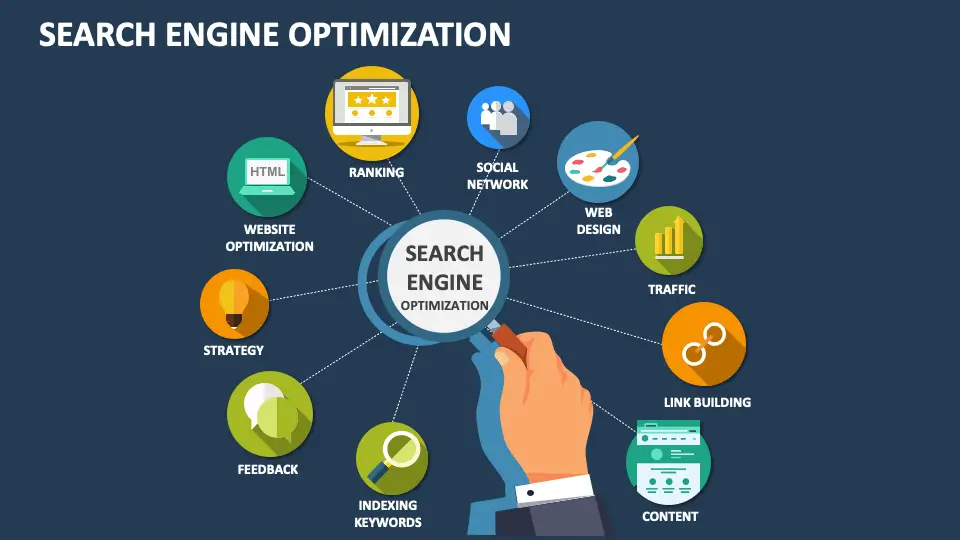
SEO stands for Search Engine Optimization. At its simplest, it is the practice of making your website easier for search engines to understand and more appealing to users — so that Google (and other engines) rank your pages higher in their results.
The end goal is organic traffic: visitors who arrive on your site because they found it naturally in a search result, not because you paid for an ad.
Why 'Organic' Traffic Matters
Paid ads disappear the moment you stop paying. Organic rankings, built through solid SEO, can generate consistent traffic for months or years with no ongoing ad spend. For bloggers, affiliate marketers, and online business owners, organic search is one of the most powerful and sustainable growth channels available.
SEO vs. SEM vs. PPC — Understanding the Difference
|
Term
|
What It Means
|
|---|---|
|
SEO
|
|
How Long Does SEO Take?
This is one of the most common questions beginners ask. SEO is not instant. For a new website, you can typically expect:
- 3–6 months to start seeing meaningful movement in rankings for low-competition keywords
- 6–12 months to rank consistently for competitive terms in most niches
- 12–24 months to build real domain authority and rank for high-volume head terms
That said, well-optimized content on an established domain can rank in days. The timeline depends on your niche, competition, domain age, link profile, and content quality.
2. How Search Engines Work — The Engine Behind the Rankings
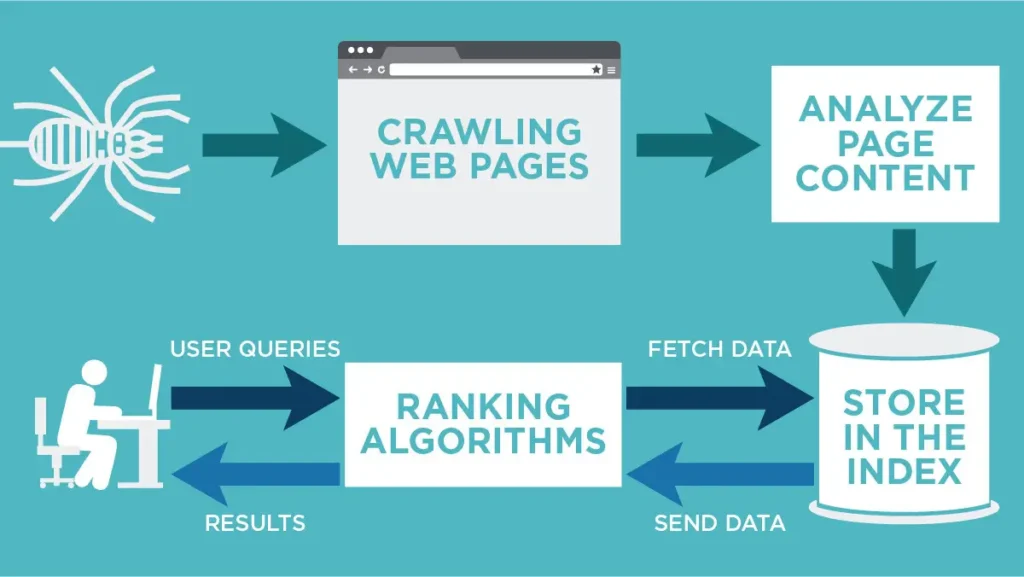
To master SEO, you must first understand what you are optimizing for. Search engines follow a three-step process before any result appears on screen: Crawl → Index → Rank.
Step 1: Crawling
Search engines use automated bots called crawlers (or spiders) — Google’s is called Googlebot — to discover pages on the internet. These bots follow links from page to page, just like a user browsing the web, discovering new and updated content along the way.
If a page cannot be crawled (due to a blocked robots.txt rule, a broken link, or poor internal linking), it will never appear in search results regardless of how good its content is.
Step 2: Indexing
Once a page is crawled, Google processes its content and stores it in a massive database called the index. Think of it as a library catalogue. Only indexed pages can appear in search results.
Common reasons a page fails to get indexed include: thin or duplicate content, noindex tags mistakenly applied, slow page speed, poor mobile experience, or being blocked by canonicalization errors.
Step 3: Ranking
When a user enters a query, Google’s algorithm scans its index and returns the most relevant and authoritative results in a specific order — the rankings. Google uses over 200 known ranking signals to determine this order, organized into three core pillars:
|
Ranking Pillar
|
What It Covers
|
|---|---|
|
Relevance
|
|
Google's Core Algorithm Updates — A Brief History
Understanding Google’s major algorithm milestones helps you understand why modern SEO is the way it is:
• Penalized thin, low-quality, and duplicate content Google Search Central Panda (2011)
• Targeted manipulative and spammy link-building practices Ahrefs Penguin (2012)
• Introduced semantic search — understanding meaning, not just keywords Yoast Hummingbird (2013)
• Brought machine learning to search; Google started learning from user behavior Search Engine Land RankBrain (2015)
• Natural language processing — Google understands context and conversational queries Google AI BERT (2019)
• Multimodal understanding across text, images, and video Google Blog MUM (2021)
• Rewarded genuinely useful, human-first content; penalized AI-generated spam Google Search Central Helpful Content System (2022–2024)
• AI-generated answer summaries appear above organic results for many queries Google AI Overviews / SGE (2024–2026)
• Targeted manipulative and spammy link-building practices Ahrefs Penguin (2012)
• Introduced semantic search — understanding meaning, not just keywords Yoast Hummingbird (2013)
• Brought machine learning to search; Google started learning from user behavior Search Engine Land RankBrain (2015)
• Natural language processing — Google understands context and conversational queries Google AI BERT (2019)
• Multimodal understanding across text, images, and video Google Blog MUM (2021)
• Rewarded genuinely useful, human-first content; penalized AI-generated spam Google Search Central Helpful Content System (2022–2024)
• AI-generated answer summaries appear above organic results for many queries Google AI Overviews / SGE (2024–2026)
3. The Four Pillars of SEO — A Complete Framework
Modern SEO can be organized into four interconnected pillars. Excelling at all four is what separates a site that ranks on page one from one that languishes on page five.
Pillar 1: Technical SEO
Technical SEO ensures that search engines can efficiently crawl, index, and render your website. It is the foundation on which all other SEO efforts rest. Without it, great content simply won’t be found.
Core Technical SEO Elements
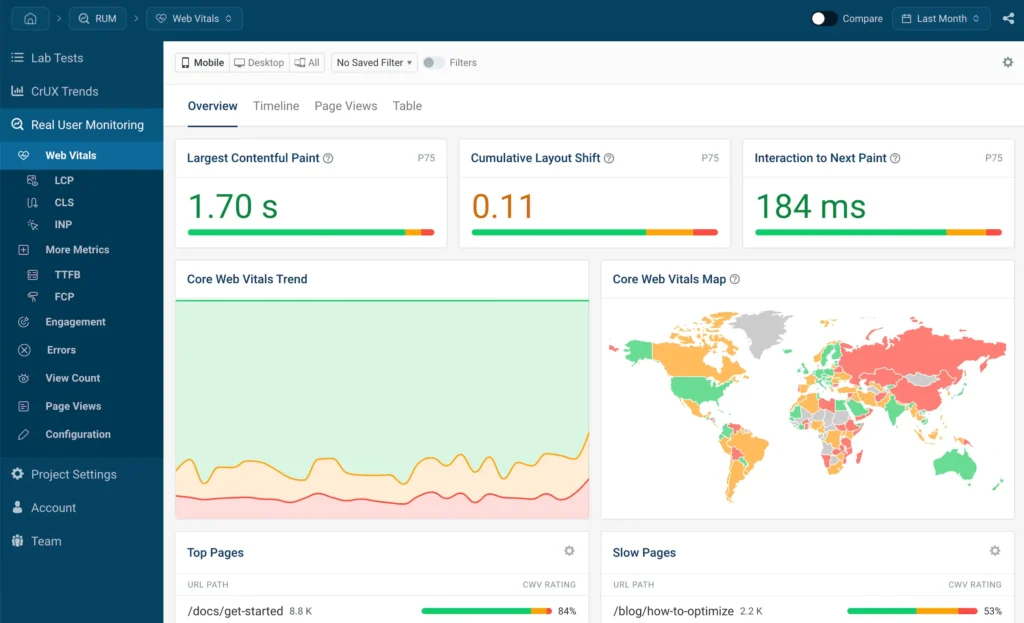
- LCP, CLS, and INP must meet Google’s performance thresholds Site speed and Core Web Vitals
- Google primarily uses the mobile version of your site for indexing Mobile-first indexing
- An SSL certificate is a baseline trust and ranking signal HTTPS and site security
- Clean robots.txt, no accidental noindex tags, logical site architecture Crawlability
- Help search engines discover all important pages efficiently XML sitemaps
- Communicate page content type to Google in machine-readable format Structured data (Schema markup)
- Prevent duplicate content issues and consolidate ranking signals Canonical tags
- Clean, descriptive, hierarchy-respecting URLs (example.com/seo/what-is-seo/) URL structure
- Critical for US/UK targeting — tells Google which page serves which region/language Hreflang tags
No intrusive interstitials, stable layout, secure browsing Page experience signals
Core Web Vitals — The User Experience Metrics That Rank
|
Metric
|
What It Measures & Target
|
|---|---|
|
LCP (Largest Contentful Paint)
|
|
Pillar 2: On-Page SEO
On-page SEO covers all optimizations you make directly on a web page to improve its relevance and ranking potential. It includes content quality, keyword usage, HTML elements, and internal linking.
On-Page SEO Checklist
- Include the primary keyword near the front. Keep under 60 characters Title tag
- Compelling summary with keyword and call-to-action. 150–155 characters Meta description
- One per page, containing the primary keyword naturally H1 tag
- Organize content logically using semantic keyword variations H2 and H3 headers
- In the first 100 words, headers, image alt text, and naturally throughout Keyword placement
- Cover the topic thoroughly — answer every likely follow-up question Content depth and comprehensiveness
- Match the format and angle that users actually want for that query Search intent alignment
- Link to related content; help users and crawlers navigate your site Internal linking
- Compress images, add descriptive alt text, use next-gen formats (WebP) Image optimization
- Use FAQPage, Article, HowTo, and BreadcrumbList schema where appropriate Schema markup
Understanding Search Intent — The Most Critical On-Page Factor
Search intent is the reason behind a query. Google’s entire algorithm is designed to match results to intent. There are four types:
|
Intent Type
|
Description & Content Format
|
|---|---|
|
Informational
|
|
This guide targets informational intent. For ‘What is SEO’, users want a comprehensive, educational explanation — not a sales page. Matching this intent is the single most important on-page optimization you can make.
Pillar 3: Off-Page SEO (Authority & Trust Building)
Off-page SEO refers to everything that happens outside your website that influences your rankings — primarily the quantity and quality of links pointing to your site (backlinks), plus broader signals like brand mentions, digital PR, and social proof.
Why Backlinks Still Matter in 2026
Backlinks act as votes of confidence from one website to another. A link from the BBC, Forbes, or Moz carries exponentially more weight than a link from an obscure directory. Google’s PageRank algorithm — still core to how rankings work — treats each backlink as an endorsement of quality.
Key principle: ten high-authority, relevant backlinks will outperform a thousand low-quality links, every time. Quality over quantity is not just a cliché — it is how the algorithm actually works.
Ethical Link Building Strategies for 2026
- Create genuinely newsworthy content, data studies, or original research that journalists want to cite Digital PR
- Write expert articles for reputable publications in your niche with a contextual author bio link Guest posting
- Find the best-performing content in your niche, create something significantly better, then outreach Skyscraper technique
- Find unlinked brand mentions and ask publishers to convert them into links Link reclamation
- Get listed on curated ‘best resources’ pages relevant to your topic Resource page link building
- Respond to media requests to earn citations from high-authority news sites HARO / journalist outreach
- Find dead links on authority sites and offer your content as a replacement Broken link building
Brand Signals and E-E-A-T
Google’s Search Quality Rater Guidelines emphasize E-E-A-T: Experience, Expertise, Authoritativeness, and Trustworthiness. While not a direct ranking signal, E-E-A-T shapes what Google considers a quality result, especially for YMYL (Your Money, Your Life) topics.
- Demonstrate first-hand experience — use case studies, personal examples, original data Experience
- Show deep subject knowledge — cite sources, use accurate terminology, go beyond surface-level Expertise
- Earn recognition from your industry — get featured on reputable sites, build brand mentions Authoritativeness
- Maintain accurate, honest, well-cited content; display clear authorship; protect user data Trustworthiness
Pillar 4: Content SEO
Content is the substance that all other SEO pillars support. Without high-quality, intentful content, technical optimization and link building accomplish very little.
The Content SEO Framework for 2026
The most effective content strategy for ranking in 2026 follows a Topic Cluster model:
- One comprehensive guide covering the broad topic (like this guide on SEO): Pillar page
- Multiple in-depth articles on subtopics (keyword research, on-page SEO, link building, etc.): Cluster pages
- Cluster pages link to the pillar page, and vice versa, creating a hub-and-spoke structure: Internal linking
Refresh content with new data, examples, and insights every 6–12 months: Regular updates
This structure tells Google that your site is a comprehensive authority on the topic — not just a single article — which significantly improves the ranking potential of every piece in the cluster.
4. Keyword Research — Finding the Exact Words Your Audience Uses
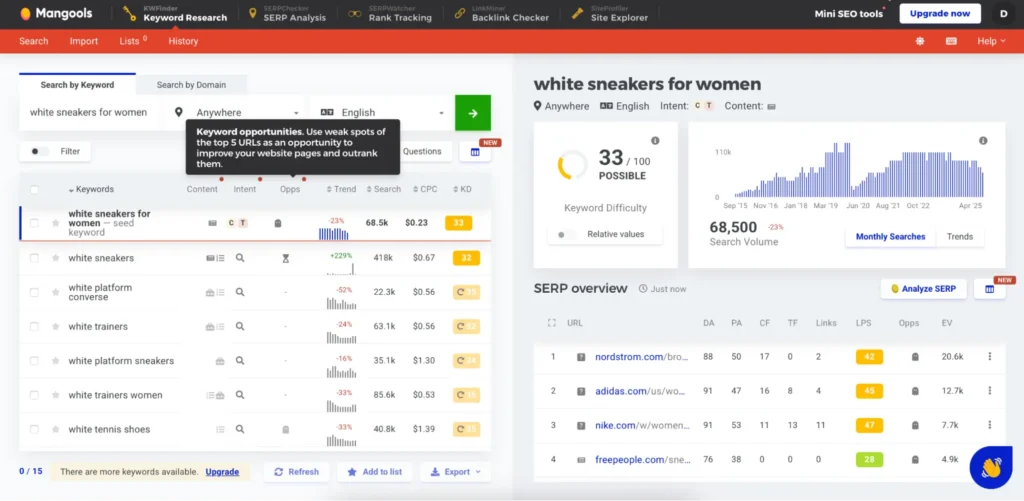
Keyword research is the intelligence-gathering phase of SEO. It reveals what your target audience is actually searching for, how often they search for it, how competitive those searches are, and what kind of content they expect to find.
Key Keyword Metrics to Understand
|
Metric
|
Definition
|
|---|---|
|
Search Volume
|
|
The Best Keyword Research Tools
- The gold standard for keyword difficulty, search volume, and backlink analysis Ahrefs
- Excellent for competitive analysis, keyword gaps, and content audit SEMrush
- Free; accurate volume data directly from Google — great for beginners Google Keyword Planner
- Shows which queries already bring traffic to your site — the most honest data available Google Search Console
- Visual maps of questions people ask — excellent for PAA and FAQ optimization AnswerThePublic / AlsoAsked
- Beginner-friendly, affordable entry-level tool Ubersuggest
- Free, real-time signals of what users are searching right now Google Autocomplete + Related Searches
How to Build a Keyword Strategy for Your Blog
- List 10–15 broad terms that define your niche (e.g., SEO, blogging tips, make money online): Start with seed keywords
- Use tools to find variations, questions, and related terms around each seed: Expand to keyword clusters
- Group keywords by intent type — one piece of content should target one primary intent: Analyse intent
- Target keywords where you can realistically compete given your domain authority: Assess competition
- Start with low-difficulty, high-intent long-tail keywords for faster early traction: Prioritize long-tail wins
- Assign each target keyword to a specific page — never target the same keyword on two pages (keyword cannibalization): Map keywords to content
💡 Pro Tip: The ‘Low Competition Long-Tail’ Strategy
New blogs in the SEO/blogging niche should focus on keywords with under 1,000 monthly searches and a KD below 20. These ‘niche long-tail’ keywords are often ignored by big sites but can collectively drive significant traffic while building domain authority. Example: instead of targeting ‘SEO tips’ (KD: 75), target ‘SEO tips for new bloggers in 2026’ (KD: 12).
5. Technical SEO Deep Dive — Site Architecture, Speed, and Structured Data
Site Architecture and Internal Linking Strategy
The structure of your website is the map that search engine crawlers follow. A flat, logical architecture ensures every important page is reachable within three clicks from the homepage and receives a strong share of your site’s internal PageRank.
Best practice: organize content into clear silos or topic clusters, use breadcrumb navigation, and ensure that every page has at least a few contextually relevant internal links pointing to it. Orphaned pages (pages with no internal links) are essentially invisible to Google.
Page Speed Optimization — Practical Steps
- Use a fast, reliable hosting provider (managed WordPress or cloud hosting for speed)
- Implement lazy loading for images — only load what the user can currently see
- Compress and convert images to WebP format; use CDN for delivery
- Minify CSS, JavaScript, and HTML files
- Enable browser caching and server-side caching
- Eliminate render-blocking JavaScript — defer non-critical scripts
- Use Google PageSpeed Insights and Lighthouse to measure and identify bottlenecks
Structured Data and Schema Markup
Schema markup is code (in JSON-LD format) that you add to your pages to communicate their content type and key entities directly to search engines. It enables rich results — enhanced SERP appearances that dramatically increase visibility and click-through rate.
High-Priority Schema Types for Bloggers and Content Sites
- Marks up blog posts with author, publish date, and headline Article schema
- Enables FAQ-rich results; questions and answers can appear directly in SERPs FAQPage schema
- Step-by-step instructions that can appear as a rich result HowTo schema
- Displays navigation path in search results, improving UX and click-through BreadcrumbList schema
- Links author identity across the web — supports E-E-A-T signals Person schema
- Establishes brand identity with Google’s Knowledge Graph Organization schema
International SEO — Targeting Both US and UK Audiences
Since LearnInWorld.com targets both US and UK audiences, international SEO implementation is essential. Key considerations:
- Use hreflang tags to tell Google which version of a page serves which locale (en-US vs en-GB)
- Be aware of vocabulary differences: ‘optimization’ (US) vs ‘optimisation’ (UK), ‘analyze’ vs ‘analyse’
- Use a geotargeting setting in Google Search Console for region-specific signals
- Host your primary domain on a fast CDN with both US and UK edge nodes
- Consider separate URL structures (/us/ and /uk/ or ccTLDs) only if content differs significantly
6. On-Page SEO Mastery — Writing Content That Ranks and Converts
The Anatomy of a Perfectly Optimized Page
Ranking high in 2026 requires every element of a page to work together cohesively. Here is a breakdown of each component:
Title Tag
The title tag is the most important on-page element. It appears as the blue clickable headline in Google’s search results. Best practices:
- Include your primary keyword as close to the beginning as possible
- Keep it between 50–60 characters to avoid truncation
- Make it compelling enough to earn the click — your CTR affects rankings
Include your brand at the end: | LearnInWorld.com
Meta Description
Meta descriptions don’t directly impact rankings, but they dramatically influence CTR. A compelling meta description can increase clicks by 20–30%, which in turn improves rankings as a user behavior signal.
- Write in active voice with a clear value proposition
- Include the primary keyword naturally (Google may bold it in results)
- End with a call to action: ‘Learn more’, ‘Start today’, ‘Get the guide’
- Target 150–155 characters
Content Structure and Semantic SEO
Semantic SEO is the practice of creating content that comprehensively covers a topic’s full semantic field — all the related concepts, entities, synonyms, and co-occurring terms that Google expects to see when a page claims to be about a subject.
For ‘What is SEO’, Google expects to see terms like: search engine optimization, rankings, organic traffic, Google algorithm, on-page, off-page, technical SEO, backlinks, keyword research, SERP, meta tags, crawling, indexing. A page missing these semantic signals will struggle to rank even if its primary keyword is well-placed.
Writing for Featured Snippets and AI Overviews
Featured snippets (position zero) appear above traditional organic results and capture up to 20% of all clicks for a query. AI Overviews (Google’s AI-generated summaries) cite sources in their responses — making snippet-optimized content increasingly valuable.
How to Format Content for Snippet Capture
- Lead each section with a direct, concise 40–60 word answer to the question posed by the subheading
- Use question-based H2 and H3 subheadings that mirror exact search queries
- Follow the answer with expanded explanations, examples, and bullet lists for depth
- Include clean, labelled comparison tables — Google loves pulling these as table snippets
- Add FAQ sections with FAQPage schema to dominate the ‘People Also Ask’ boxes
- Use numbered lists for ‘how to’ and process queries — Google often lifts these as ordered list snippets
7. Local SEO — Dominating Your Geographic Market
For businesses serving a specific location (or for bloggers targeting regionally relevant content), local SEO is a distinct discipline with its own ranking factors.
For businesses serving a specific location (or for bloggers targeting regionally relevant content), local SEO is a distinct discipline with its own ranking factors.
Google Business Profile (GBP) Optimization
A fully optimized Google Business Profile is the single most impactful local SEO action. It enables your business to appear in Google’s ‘Local Pack’ — the map results that appear above organic listings for location-based searches.
- Claim and verify your GBP listing
- Select the most accurate primary and secondary business categories
- Write a keyword-rich business description (750 characters maximum)
- Upload high-quality photos of your premises, products, or team
- Collect and respond to reviews consistently — review velocity matters
- Use Google Posts to publish updates, offers, and events
- Keep NAP (Name, Address, Phone) information perfectly consistent across all platforms
Local Citation Building
Citations are online mentions of your business’s NAP data. Consistent citations across authoritative directories signal trust to Google. Priority UK and US directories include: Google Business Profile, Bing Places, Apple Maps, Yelp, Facebook, and industry-specific directories relevant to your niche.
8. SEO for AI Search — Optimizing for Google's AI Overviews and LLMs

The search landscape of 2026 is fundamentally different from 2020. AI Overviews (Google’s Search Generative Experience) now appear for a large proportion of informational queries, summarizing answers from multiple sources above the organic results. Simultaneously, users are increasingly turning to AI tools like ChatGPT, Claude, and Perplexity as search alternatives.
What Are Google AI Overviews?
AI Overviews are AI-generated summaries that appear at the top of Google’s search results for many queries. They pull information from multiple sources and credit those sources with in-text citations. Being cited in an AI Overview drives both brand visibility and referral traffic — even without a traditional top-10 ranking.
How to Optimize for AI Overviews and LLMs
- Answer questions directly and concisely in the first paragraph of each section
- Use authoritative, fact-based language — AI systems favor high-confidence factual statements
- Structure content with clear H2/H3 questions and answers — this is how AI systems extract information
- Build strong E-E-A-T signals — AI prioritizes well-attributed, credible sources
- Earn backlinks from high-authority domains — these signals influence AI source selection
- Create unique data, original research, and first-hand insights — AI cannot replicate what doesn’t exist elsewhere
- Implement FAQ schema — structured data improves the machine-readability of your content
- Maintain a clean, fast, technically sound website — AI systems favor pages Google trusts
Search Everywhere Optimization (SEVO)
Beyond Google, savvy SEOs in 2026 are adopting Search Everywhere Optimization — ensuring their brand and content appears across all discovery channels where their audience searches, including:
- Google (organic, AI Overviews, featured snippets, image search, video search)
- YouTube (the world’s second-largest search engine)
- AI tools (ChatGPT, Claude, Perplexity, Gemini — all increasingly used for discovery)
- Social search (TikTok, Instagram, Pinterest, Reddit — especially among younger audiences)
- Voice search (Siri, Alexa, Google Assistant — conversational, question-based queries)
9. SEO Strategy Framework — A Step-by-Step Execution Plan
Strategy without execution is meaningless. Here is a practical, phase-based SEO framework designed for bloggers and content creators in the SEO, AI, and make money online niche.
Phase 1: Foundation (Months 1–2)
- Use Screaming Frog or Ahrefs Site Audit to identify crawl errors, broken links, duplicate content, and page speed issues: Technical audit
- Build a master keyword spreadsheet with 100–200 target keywords grouped by topic cluster: Keyword research
- If you have existing content, assess what can be improved, merged, or redirected: Content audit
- Plan your pillar pages, cluster pages, and internal linking structure before creating new content: Site architecture
- Verify your domain, submit your sitemap, and ensure accurate tracking: Google Search Console + Analytics setup
Phase 2: Content Creation (Months 2–6)
- Create comprehensive, deeply researched guides on your 3–5 core topics: Publish pillar pages
- Publish 8–15 supporting articles per pillar, each targeting long-tail variations: Build topic clusters
- Structure every article with direct answers, clear headers, comparison tables, and FAQ sections: Optimize for featured snippets
- Each new article should link to the pillar page and to 2–3 related cluster articles: Internal link systematically
- Add FAQPage, Article, and BreadcrumbList schema to every key page: Implement schema markup
Phase 3: Authority Building (Months 4–12)
- Identify link-worthy content assets and pitch them to relevant publications: Digital PR outreach
- Write for established SEO and digital marketing blogs; include author bio links: Guest posting
- Engage in Reddit, Quora, Twitter/X, LinkedIn, and niche forums — build brand mentions: Community building
- Collect testimonials, case studies, and user success stories: Build social proof
- Conduct and publish original data studies — these attract natural high-authority backlinks: Original research
Phase 4: Optimization and Scaling (Months 6+)
- Track keyword movements in Google Search Console and a rank tracker: Monthly ranking reviews
- Update your highest-traffic and highest-potential pages every 6–12 months: Content refresh cycle
- Optimize landing pages for conversions — traffic without conversions is meaningless: CRO integration
- Once you rank well in your core topics, expand into adjacent, high-value keyword clusters: Expand to new keyword clusters
- Track what your top SERP competitors are publishing and earning links to: Monitor competitors
10. SEO Metrics — What to Measure and How
Data without interpretation is just noise. Focus on the metrics that directly connect SEO activity to business outcomes.
Primary SEO Metrics
|
Metric
|
What It Tells You
|
|---|---|
|
Organic Sessions (Google Analytics)
|
|
11. Common SEO Mistakes to Avoid
Beginner Mistakes
- Targeting keywords that are too competitive for your domain authority
- Publishing thin content (under 800 words) without sufficient depth or value
- Ignoring meta titles and descriptions — or leaving them auto-generated
- Using irrelevant or purchased backlinks — these can trigger manual penalties
- Neglecting mobile optimization — Google indexes the mobile version first
- Skipping internal linking — many bloggers link out but forget to link internally
- Creating multiple pages targeting the same keyword (keyword cannibalization)
Intermediate Mistakes
- Over-optimizing anchor text — using the exact keyword in every link looks unnatural
- Publishing content without a keyword strategy — writing without researching intent first
- Ignoring page speed — a one-second delay can reduce conversions by 7%
- Not using structured data — leaving rich result opportunities on the table
- Failing to update old content — outdated posts lose rankings progressively
Advanced Mistakes
- Building pages without a topic cluster strategy — isolated content gets less authority than interconnected clusters
- Chasing algorithm updates reactively rather than building a fundamentally sound site
- Using AI-generated content at scale without human review and original insight — risks Helpful Content penalties
- Neglecting E-E-A-T signals on YMYL or competitive topics — makes ranking extremely difficult
- Failing to account for zero-click trends — optimize titles and meta descriptions to get clicks even when a snippet is shown
12. The Future of SEO — What's Coming in 2026 and Beyond
AI and the Transformation of Search
Artificial intelligence is not disrupting SEO — it is reshaping it. Google’s AI Overviews now appear for hundreds of millions of queries. ChatGPT, Perplexity, and Claude are becoming genuine search alternatives for a growing segment of users. The brands that understand how AI systems discover and evaluate content will own the next decade of organic visibility.
Key Trends Defining SEO in 2026
- Google is increasingly effective at distinguishing genuinely helpful human-expert content from mass-produced AI filler. Original insight and first-hand experience are now table stakes AI-generated content quality standards
- Google Lens and visual search are growing rapidly — images need descriptive filenames, alt text, and contextual placement Visual and multimodal search
- Smart speaker and voice assistant usage continues to rise — conversational, question-based content wins Voice and conversational search
- A growing share of searches end without a click as AI Overviews answer directly. The goal is to be the cited source, not just to rank Zero-click and direct answers
- Google increasingly favors known, credible brands. Building a recognizable name in your niche is becoming an SEO strategy in itself Brand authority as a ranking signal
- As third-party cookies phase out, sites with engaged email lists and direct audience relationships will have a competitive intelligence advantage First-party data and privacy
Will SEO Die Because of AI?
No. And here is why: behind every AI system, there is still a human looking for a trustworthy answer to a real question. The fundamental value exchange of SEO — providing genuinely useful, authoritative information in exchange for visibility and traffic — does not change. What changes is the medium through which that visibility is delivered.
The sites that invest in building real expertise, comprehensive content, technical excellence, and genuine authority will continue to thrive — whether the results are delivered as a blue link, a featured snippet, an AI Overview citation, or a voice answer.
FAQ'S
SEO (Search Engine Optimization) is the process of improving your website so it appears higher in Google's search results when people type in relevant queries. The higher you rank, the more free (organic) traffic you receive.
The three main types of SEO are: Technical SEO (the behind-the-scenes structure of your website), On-Page SEO (the content and HTML elements on each page), and Off-Page SEO (external authority signals, primarily backlinks from other websites).
Yes, absolutely. Despite the rise of AI tools and zero-click searches, organic search remains one of the highest-intent, highest-converting traffic sources available. Google processes over 8.5 billion searches per day, and the majority of clicks still go to organic results — not paid ads.
SEO costs vary enormously. DIY SEO for a blog costs primarily time, plus $100–$200/month for essential tools like Ahrefs or Semrush. Hiring a freelance SEO specialist costs £500–£2,000/month in the UK or $1,000–$5,000/month in the US. Enterprise agency SEO can run to $10,000+/month.
SEO generates organic (free) traffic that requires consistent long-term investment in content and authority. Google Ads generate immediate paid traffic that stops the moment your budget runs out. SEO has a higher long-term ROI; Google Ads offer faster results and greater control over targeting.
A featured snippet is a box that appears at position zero in Google's results, showing a direct answer to a question from a web page. To earn one: answer the target question directly in 40–60 words at the top of a section, use question-based headings, include relevant lists and tables, and add FAQPage schema markup.
Keyword cannibalization occurs when two or more pages on your website target the same keyword, causing them to compete against each other in Google's results. This dilutes ranking signals and can prevent either page from ranking well. Fix it by merging similar pages or using canonical tags.
Track organic sessions in Google Analytics, keyword rankings in Google Search Console or a rank tracker, CTR trends, domain rating growth in Ahrefs/Semrush, and organic conversions. Consistent upward trends across these metrics over 3–6 months indicate SEO is working.
AI-generated content is not inherently penalized by Google — but thin, generic AI content without original insight, experience, or editorial review is. Google's Helpful Content system targets content that provides no additional value over what already exists. Use AI as a productivity tool but always add genuine expertise, original examples, and human review.
The fastest path to Google rankings is targeting low-competition long-tail keywords on a technically sound website with well-structured, intent-matched content. Pages targeting low-KD queries on established domains can rank within days to weeks. For competitive head terms, expect 6–24 months of consistent effort.
“Master digital skills with expert insights, actionable strategies, and real-world experience.”
– Mohd Saif Khursheed

Mohd Saif Khursheed
April 14, 2026
Previous Post
Next Post

Mohd Saif khursheed
SEO Expert & Digital Marketing Specialist
Helping businesses grow online with proven SEO, content marketing, and digital strategies. Based in India, serving globally.
Category
Have a Question?
Have a question in mind? Ask us anytime — we’ll help you find the right answer.